
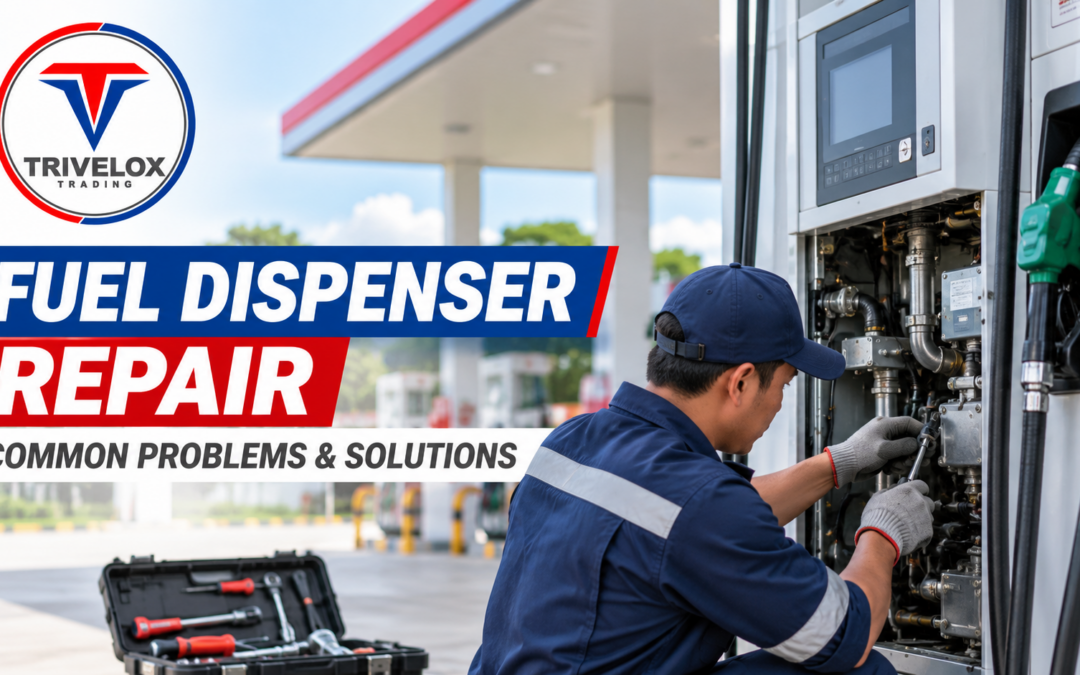
Fuel dispensers are essential equipment for every gas station. When a dispenser develops a problem, it can interrupt daily operations, delay customers, and affect business productivity.
For gas station owners in the Philippines, understanding common fuel dispenser problems can help identify when professional troubleshooting and repair are needed. Regular maintenance and timely repairs can also help keep fuel dispensing equipment operating reliably.
1. Fuel Dispenser Is Not Dispensing Fuel
One common problem is a dispenser that fails to deliver fuel when the nozzle is activated. Possible causes include problems with the pump or motor, electrical supply issues, a faulty control system, or blockages in the fuel delivery system.
A qualified technician should inspect the equipment to identify the cause before repairs are performed.
2. Fuel Dispenser Turns On but Does Not Start Pumping
Sometimes the display is working, but the dispenser does not begin pumping fuel. This may be caused by an electrical fault, a control-system issue, a pump problem, or a safety interlock.
Professional troubleshooting can help determine which component requires attention.
3. Fuel Dispenser Display Is Not Working Properly
The display provides important information during fuel dispensing. If it is blank, flickering, or showing incorrect information, customers and station operators may have difficulty using the equipment.
Possible causes include electrical problems, damaged display components, or communication faults. A technician can check the display and related electronic components.
4. Fuel Dispenser Has Slow Fuel Flow
Slow fuel flow can cause longer waiting times and inconvenience customers. Possible causes include a clogged filter, a worn pump, a restricted hose, or another issue in the fuel delivery system.
A qualified technician should inspect the system and replace worn or blocked components when necessary.
5. Fuel Dispenser Nozzle Keeps Shutting Off
A nozzle that repeatedly shuts off before the tank is full can interrupt refueling. The cause may involve the nozzle’s automatic shutoff mechanism, restricted fuel flow, or an issue with the nozzle or vapor-return system, depending on the equipment.
Have the nozzle and related components inspected rather than attempting to modify the safety mechanism.
6. Fuel Dispenser Has a Fuel Leak
Fuel leakage around a dispenser, hose, nozzle, or connection is a serious safety concern. It may indicate damaged seals, loose connections, or worn components.
Stop using the affected equipment, keep ignition sources away, and follow the station’s emergency procedures. Have qualified personnel inspect and repair the equipment before it returns to service.
7. Fuel Dispenser Buttons or Keypad Are Not Responding
An unresponsive keypad can prevent operators from entering commands or using the dispenser correctly. Potential causes include worn buttons, electrical faults, moisture, or control-system problems.
A technician can inspect the keypad, wiring, and control components to determine whether repair or replacement is needed.
8. Fuel Dispenser Frequently Stops During Operation
If a dispenser repeatedly stops during fueling, the cause may involve the pump, electrical supply, control system, overheating, or a safety-related fault.
Record when the problem occurs and arrange for professional troubleshooting. Do not bypass safety devices to keep the dispenser running.
9. When Should You Repair or Replace a Fuel Dispenser?
The right decision depends on the equipment’s condition, age, repair history, parts availability, and operating requirements.
Repair may be appropriate when the problem is limited to a replaceable component. Replacement may be worth considering when breakdowns are frequent, major components are failing, or repairs are no longer practical.
A qualified technician can assess the condition of the dispenser and explain the available options.
10. How to Prevent Fuel Dispenser Problems
Preventive maintenance can help identify developing issues before they cause unexpected downtime. Gas station operators should:
- Schedule regular inspections and maintenance.
- Check hoses, nozzles, and visible connections for damage or leakage.
- Monitor unusual noises, slow flow, and display errors.
- Keep maintenance and repair records.
- Use compatible replacement parts.
- Arrange troubleshooting when recurring faults appear.
- Follow manufacturer instructions and applicable safety requirements.
Only qualified personnel should perform technical repairs and work on electrical or fuel-handling components.
Professional Fuel Dispenser Repair and Maintenance in the Philippines
Keeping fuel dispensing equipment in good working condition is important for safe and reliable gas station operations. Addressing problems early can help reduce downtime and prevent minor issues from becoming more serious.
Trivelox Trading Inc. provides fuel dispenser-related products and support, including repair, technical and electronic troubleshooting, tank and pump cleaning, and maintenance services.
If your fuel dispenser needs inspection, repair, or maintenance, contact our team to discuss your equipment and service requirements.
Contact Trivelox Trading Inc.
Phone: 0908-388-1072
Email: [email protected]
Website: https://trivelox.com
Facebook: Triveloxtradinginc
Address: Lot 11, Blk 4, Juanita Lane, Holy Family Village Phase 2, Angeles City, Pampanga 2009
Contact us to discuss your fuel dispenser repair and maintenance needs.